A warm welcome to the place that witnessed my birth, my home and that of my forefathers: Arcos de la Frontera, a tiny and beautiful city within the Kingdom of Seville, which in the bygone days of former Kings Ferdinand the Third and Alfonso the Tenth (13th century) was an unsettled border outpost between the Kingdoms of Castile and Granada. Upon the arrival of Alfonso’s troops to fight in the Jerez campaign, forming part of this war to conquer borderlands that still rages to this day in the lands closest to the Nazari stronghold.
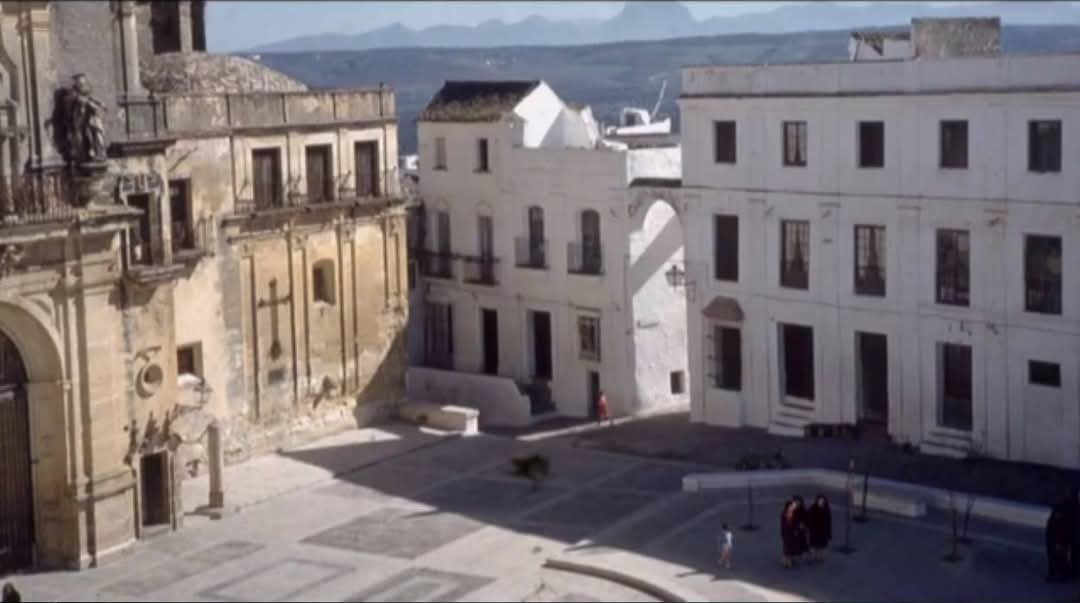
In this square forming part of the Castle, where sky and land merge, is where Arkus, as it was known in the times of my Moorish forebears, has its roots in the remote era of the Emirate of Cordova, also re-ferred to as the Caliphate, in the eighth century. Where today we can wonder at the Ponce de León Cas-tle, a small fort was built which the residents of the time called Qal'at al-Nusur (the Eagles’ Fort), as it was set upon the highest point as a means of overseeing the vast territory that bathes the river valley that surrounds us: the wādī Lakka or as we call it, the Guadalete. Around this small fort, which was later up-graded into a Citadel, many families of Berber origins laid down their family roots in this place, thus form-ing the Arkus Medina, in the former choir of Sidonia (Shiduna). A Medina that continued to grow over the passage of time until the creation of the Taifa of Arkus (1012), founded by the Banū Jizrūn Berber dynasty until several decades later, in 1069, a power struggle took place that left it in the hands of the Taifa of Se-ville’s king, Al-Mutamid. It is in this period of our history when our city attained its greatest level of splen-dour, with the construction of new city walls and their three gates.
Let us then begin the narration of our route in the atrium of Saint Mary’s Church.